Written by Sohrab Izad, Founder, Izad Development
Buyers evaluating a new custom home in Milton often budget carefully for the purchase price and construction cost, then treat property taxes as an afterthought — something to look up later from a listing estimate. For new construction specifically, that approach can produce a real surprise, because Georgia's assessment rules create a timing quirk that doesn't apply to buying an existing home.
Georgia Assesses Property Value as of January 1
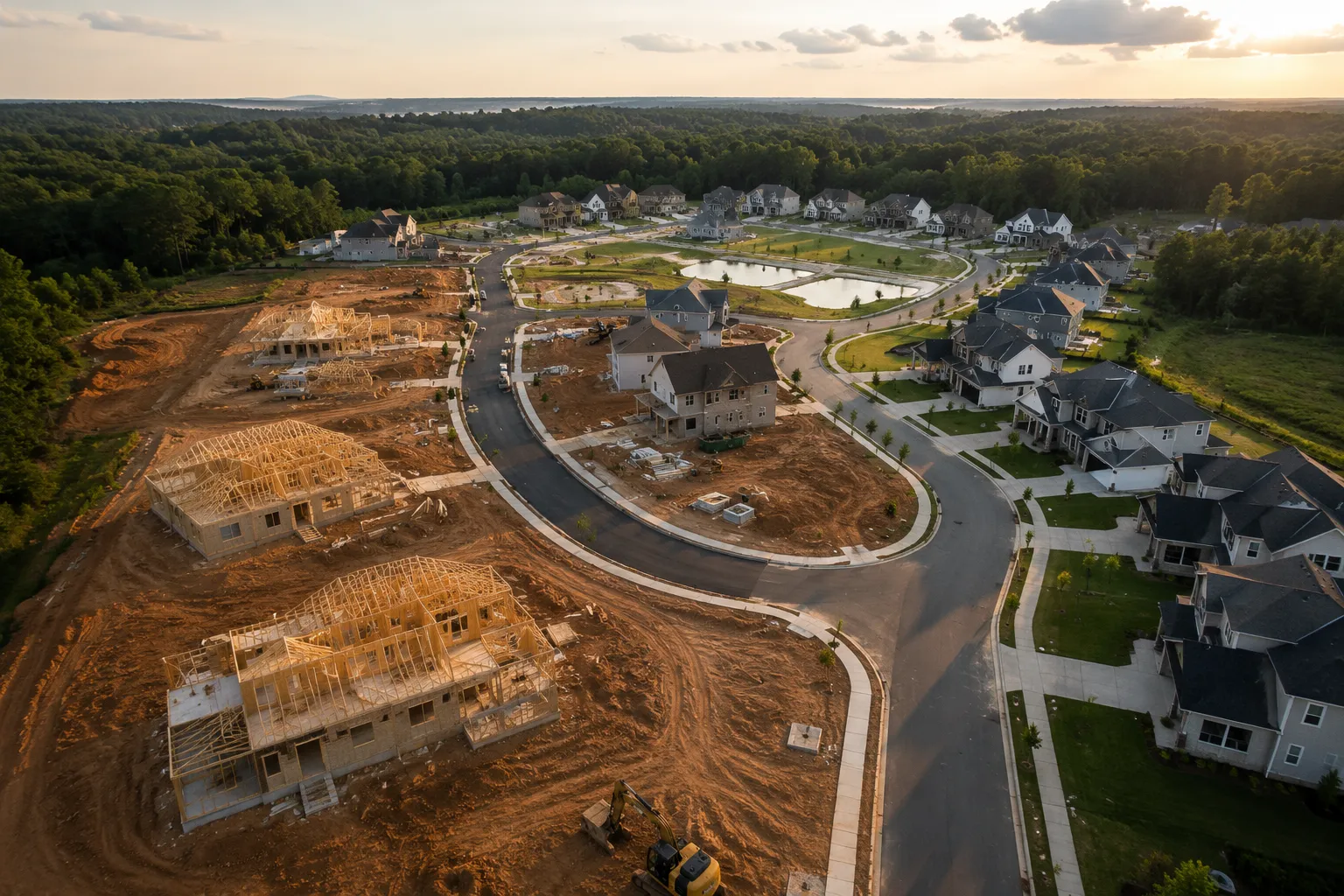
Under Georgia law, every property is valued and taxed based on its condition as of January 1 of that tax year. Improvements made after January 1 aren't reflected until the following year's assessment. For a finished, move-in-ready home, this rarely matters. For a home that's still under construction on January 1 — framing underway, or even site work only — it matters a great deal: that year's tax bill can reflect only the land value, or a partial value tied to how complete the home was on that date, with the full assessed value catching up the following year once the county records the completed improvement.
Why This Catches Buyers Off Guard
A buyer who closes on a new home mid-construction, or shortly after completion, sometimes assumes the current tax bill — based on land-only or partial value — is a reasonable preview of ongoing costs. It usually isn't. Once the county's next assessment cycle reflects the completed home, the bill can increase substantially in a single year. This isn't a Milton-specific quirk or anything unique to a particular builder — it's how Georgia's January 1 assessment date works statewide — but it's especially relevant for buyers purchasing homes that are actively under construction, like individual homesites at a project in its early phases.
What Milton's Current Millage Rate Actually Is
The City of Milton's municipal millage rate for the current tax year is 4.193 mills for maintenance and operations, plus a separate 0.310 mills for the city's greenspace bond — together the lowest combined city rate in Milton's history. One mill equals $1 of tax for every $1,000 of assessed value, and Georgia assesses residential property at 40% of fair market value before applying the millage rate or any exemptions. It's worth being clear about what this city rate does and doesn't cover: a Milton property tax bill also includes separately set Fulton County operating and Fulton County Schools millage, which make up the largest share of most bills. Because those are set independently by the county and school board, we'd point buyers to Fulton County's Tax Assessor and Tax Commissioner offices for the current combined rate rather than rely on a figure that can shift from one budget cycle to the next.
The Homestead Exemption Only Applies If You Live There
Georgia and Milton both offer a homestead exemption that reduces a home's assessed value for tax purposes — but only for an owner's primary residence, and only after you file for it with Fulton County, typically by a spring deadline for that tax year. It does not apply automatically, and it does not apply to a second home, an investment property, or a home still titled to a builder or developer. Buyers planning to make a new Milton home their primary residence should plan to file for the exemption as soon as they're eligible, rather than assuming it's already reflected in any tax estimate they've seen.
What to Actually Ask Before Closing
Rather than using the current tax bill on a home still under construction as a budgeting guide, it's worth asking directly: what was the most recent assessed value, and does it reflect the land only, a partial completion value, or the finished home? A seller, builder, or closing attorney can usually speak to where a specific property sits in that cycle. For homes purchased well before completion — such as a homesite at a project still in its early construction phases — it's reasonable to expect the first full year's tax bill to look meaningfully different from whatever the current bill shows.
Where This Applies on Our Current Projects
This is directly relevant to anyone evaluating a homesite at Providence Point, our five-home community in Milton, since buying in during an earlier construction phase means the property's tax assessment will likely follow the pattern described above rather than reflecting a finished home's value right away. You can see current construction status at the Providence Point construction progress page. Budgeting for carrying costs more broadly — including property taxes, insurance, and financing — is also covered in our free North Atlanta Development Guide.
If you're evaluating a specific homesite and want help thinking through the real timeline and costs involved, reach out directly and we can walk through what to expect for that specific property.